Paper Fasteners may look like minor office supplies, yet they influence document security, handling speed, presentation, and total purchasing cost. Global buyers must compare more than appearance. Material, corrosion resistance, holding strength, loading method, packaging, and compatibility all deserve attention. A polished finish can hide weak wire. A low price can create higher replacement costs.
Stationery sourcing consultant Elena Marquez explains, “The best paper fastener is not the strongest one; it is the one matched to the paper, process, and user.” This practical view supports the purpose of our guide, Top 10 Types of Paper Fasteners for Global Buyers. The list examines staples, paper clips, binder clips, brads, split pins, eyelets, rivets, thumbtacks, bulldog clips, and specialty fastening systems. Each type serves a different working condition.
Small details matter.
For example, a buyer handling 80-page contracts may need stronger penetration and cleaner alignment. A school supplier may prioritize safe edges, easy opening, and reusable designs. An archive manager may consider rust resistance and long-term paper preservation. These decisions become more complex across humid warehouses, mixed paper weights, and different packing standards.
Still, no single ranking fits every market. That is worth admitting. Product descriptions often promise “heavy duty” performance without clear testing data. Buyers should request samples, inspect dimensions, and test actual documents before placing large orders. This guide offers a practical comparison, not an absolute verdict. It connects fastener design with real purchasing conditions, helping importers, distributors, and office-supply brands choose with greater confidence.
Top 10 Types of Paper Fasteners for Global Buyers
What Paper Fasteners Are and How They Secure Documents
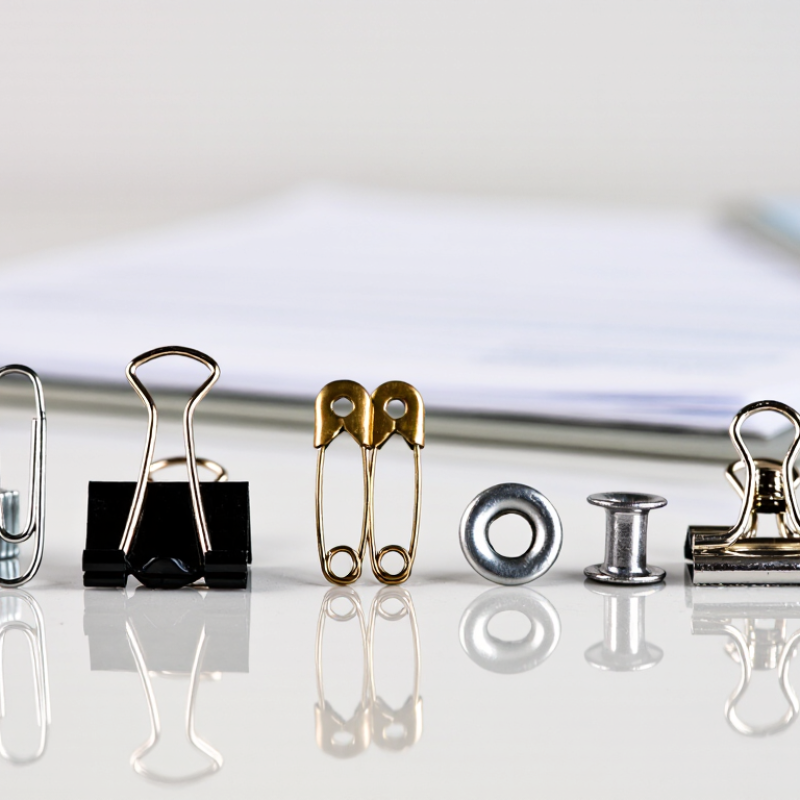
Paper fasteners are small tools that hold sheets together without adhesives. Their value depends on document thickness, access frequency, and storage conditions. Common options include staples, paper clips, binder clips, split pins, prong fasteners, brass fasteners, treasury tags, screw posts, elastic bands, and ring mechanisms.
Each design solves a different problem. Staples create a firm, compact join for routine files. Paper clips allow quick removal, but they can slide from smooth pages. Binder clips grip thicker bundles through spring tension. Split pins pass through punched holes and open behind the stack. Screw posts provide stronger alignment for samples, catalogs, and archival folders. Ring mechanisms support repeated page turning.
Small parts. Major consequences.
The U.S. Environmental Protection Agency reported 67.4 million tons of paper and paperboard waste in 2018. About 46.0 million tons were recycled, producing a 68.2% recovery rate. This data highlights why removable fasteners can support reuse and easier material separation. However, the report is not specific to office fasteners, so buyers should avoid overstating its meaning.
In practical purchasing, test a full bundle before selecting large quantities. Check hole tearing, rust resistance, grip strength, and removal effort. A cheap clip may deform after repeated use. A strong fastener may damage thin paper. No option is universal.
| No. | Paper Fastener Type | How It Secures Documents | Typical Sheet Capacity | Reusable? | Hole or Tool Requirement | Common Materials | Best-Suited Applications | Key Buying Considerations |
|---|---|---|---|---|---|---|---|---|
| 1 | Two-Prong Paper Fastener | Two metal prongs pass through punched holes and fold outward against the back of the document. | Approximately 20–100 sheets, depending on prong length and paper thickness. | Yes, although repeated bending can weaken the prongs. | Requires two punched holes, normally spaced to match a standard file folder. | Steel, zinc-plated steel, or brass-coated steel. | File folders, accounting records, invoices, reports, and archived paperwork. | Check prong length, corrosion resistance, hole spacing, and compatibility with the intended folder system. |
| 2 | Paper Clip | A looped wire creates spring tension that grips several sheets without piercing them. | Approximately 10–30 sheets for standard sizes; larger clips may hold more. | Yes. | No holes or special tools are required. | Galvanized steel, stainless steel, or coated wire. | Temporary document grouping, office paperwork, receipts, and mail. | Consider wire diameter, clip size, edge smoothness, rust resistance, and the risk of paper creasing. |
| 3 | Binder Clip | A folded metal clamp uses spring tension to grip the edge of a document stack; wire handles allow opening and release. | Approximately 20–250 sheets, depending on clip width and paper thickness. | Yes. | No holes or special tools are required. | Formed steel with metal or plastic-coated handles. | Thick reports, presentation materials, purchasing files, and temporary storage. | Compare clip width, clamping strength, handle design, coating quality, and storage space required. |
| 4 | Staple | Two legs penetrate the paper and fold underneath, permanently or semi-permanently joining the sheets. | Approximately 2–50 sheets, depending on staple size and stapler capacity. | No; removal is possible but usually requires a staple remover. | Requires a compatible stapler and, for removal, a staple remover. | Galvanized steel, stainless steel, or other coated steel. | Office documents, booklets, forms, packaging, and routine document assembly. | Match leg length and crown size to the stapler and document thickness; check material and rust protection. |
| 5 | Screw Post Fastener | A threaded post and screw pass through aligned holes and tighten together to compress the document stack. | Approximately 5–300 sheets, depending on post length and paper weight. | Yes. | Requires punched holes and a screwdriver or compatible tightening tool. | Aluminum, brass, steel, or durable plastic. | Swatch books, portfolios, manuals, samples, reports, and presentation documents. | Evaluate post length, thread strength, head style, hole diameter, corrosion resistance, and ease of expansion. |
| 6 | Chicago Screw Fastener | A screw passes through a hollow post from the opposite side, clamping papers between the two components. | Approximately 10–200 sheets, depending on the post length. | Yes. | Requires aligned punched holes and usually a screwdriver. | Steel, brass, aluminum, or plastic. | Bookbinding, leather goods, menus, portfolios, product samples, and removable document sets. | Confirm screw-post dimensions, thread compatibility, finish, tightening torque, and resistance to loosening. |
| 7 | Prong Paper Fastener with Compressor Bar | Metal prongs pass through punched holes while a sliding or hinged bar presses the paper stack flat. | Approximately 20–150 sheets. | Usually yes. | Requires two punched holes; no stapler is needed. | Steel, zinc-plated steel, or coated metal. | Archival folders, office filing, legal documents, and records requiring a flat spine. | Look for secure bar retention, smooth edges, suitable prong length, and resistance to repeated opening. |
| 8 | Foldback Paper Fastener | Metal or plastic tabs fold over the document edges to hold pages together without punching holes. | Approximately 10–100 sheets, depending on the design and document thickness. | Yes. | No holes are normally required; some designs use a simple folding action. | Coated steel, spring steel, or molded plastic. | Reports, brochures, school materials, temporary files, and loose-leaf document sets. | Assess edge protection, gripping force, tab flexibility, capacity, and whether the fastener leaves marks. |
| 9 | Self-Adhesive File Fastener | An adhesive-backed base attaches to a folder or document surface and holds papers using prongs, slots, or a pocket. | Approximately 10–100 sheets, depending on adhesive area and fastener design. | Usually no; removal may damage the surface or reduce adhesion. | No punching tool is required for the base, although some models use punched holes for the papers. | Plastic or metal fastener components with pressure-sensitive adhesive backing. | Folders, binders, presentation boards, shipping documents, and retrofit filing systems. | Check adhesive aging, surface compatibility, temperature range, load capacity, and residue after removal. |
| 10 | Magnetic Document Fastener | Magnetic components attract through or around the paper stack, creating a removable clamp without piercing the sheets. | Approximately 5–50 sheets, depending on magnet strength and paper thickness. | Yes. | No holes or special tools are required. | Ferrite or neodymium magnets with plastic, steel, or coated covers. | Menus, display materials, presentation sheets, samples, and frequently rearranged documents. | Review magnetic strength, pull-force consistency, surface protection, shipping restrictions, and compatibility with magnetic-sensitive items. |