Why Weld Studs Are Essential for Strong and Reliable Metal Connections
Weld studs play a critical role in the assembly of metal structures, ensuring strong and reliable connections that are necessary for the integrity and longevity of various applications. According to the American Welding Society, weld studs are integral components in industries such as construction, automotive, and aerospace, where they are used to provide secure fastening solutions. The utilization of weld studs enhances the load-bearing capabilities of joints, allowing for effective stress distribution across materials. Studies show that assemblies featuring welded connections can withstand higher loads and resist fatigue significantly better than traditional fastening methods.
The growing demand for robust and efficient construction solutions has led to an increase in the adoption of weld stud technology. A recent report by MarketsandMarkets predicts that the global welding consumables market, which includes weld studs, will reach USD 30.43 billion by 2027, highlighting a compound annual growth rate (CAGR) of 4.9% from 2022 to 2027. This growth is fueled by the need for reliable metal connections that can endure extreme conditions, making weld studs an essential asset in modern engineering practices. As industry standards evolve, the importance of weld studs in achieving high-quality, durable structures cannot be overstated, underscoring their pivotal role in the future of metal fabrication and assembly.
The Importance of Weld Studs in Industrial Applications
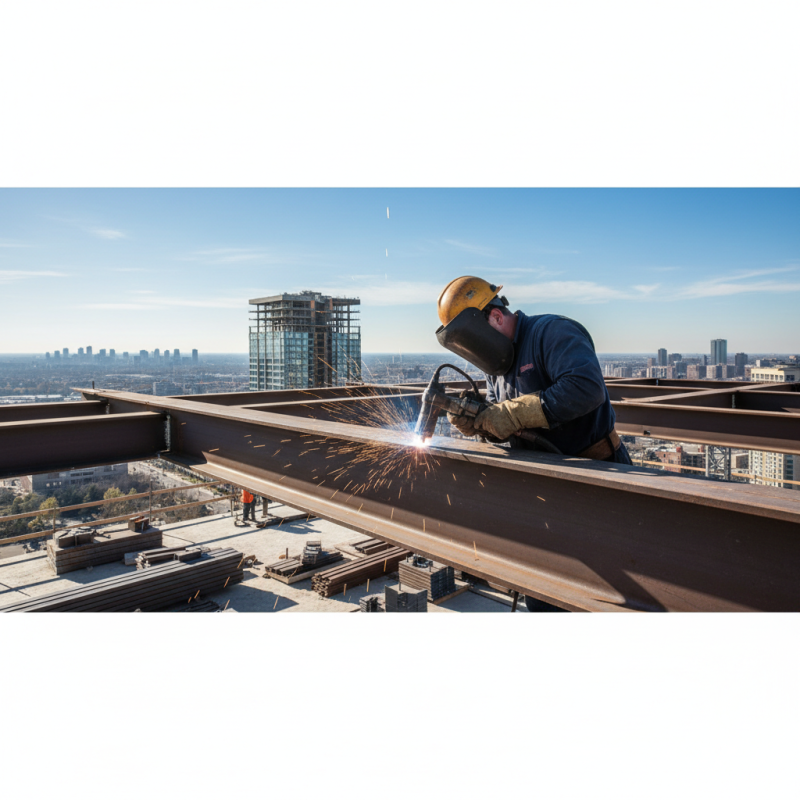
Weld studs play a crucial role in various industrial applications, ensuring strong and reliable metal connections. These components are designed for permanent attachment, providing exceptional strength that traditional fasteners often lack. In industries such as construction, automotive, and manufacturing, the integrity of metal connections is vital for safety and performance. By utilizing weld studs, engineers can create joints that withstand significant stress and strain, ultimately enhancing the durability of the structures or machinery they fabricate.
The application of weld studs is not limited to simple connections; they are integral in complex assemblies where multiple components must work in unison. For instance, in shipbuilding or aerospace, where weight and strength are critical factors, weld studs offer a streamlined solution that reduces the need for bulky fastening systems. Their capacity to distribute loads evenly across surfaces further minimizes the risk of failure, making them highly valued in high-stakes environments. As industries continue to prioritize efficiency and reliability, the significance of weld studs in achieving robust connections cannot be overstated.
Why Weld Studs Are Essential for Strong and Reliable Metal Connections - The Importance of Weld Studs in Industrial Applications
| Application Area |
Type of Weld Studs |
Material Used |
Load Capacity (kN) |
Common Industries |
| Construction |
Threaded Stud |
Steel |
25 |
Building, Infrastructure |
| Automotive |
Solid Stud |
Aluminum |
15 |
Automobiles, Motorcycles |
| Manufacturing |
Weldable Stud |
Stainless Steel |
20 |
Heavy Machinery, Equipment |
| Electronics |
Insulated Stud |
Copper |
10 |
Consumer Electronics, Wiring |
| Aerospace |
Specialty Stud |
Titanium |
30 |
Aircraft, Spacecraft |
Key Benefits of Using Weld Studs for Metal Connections
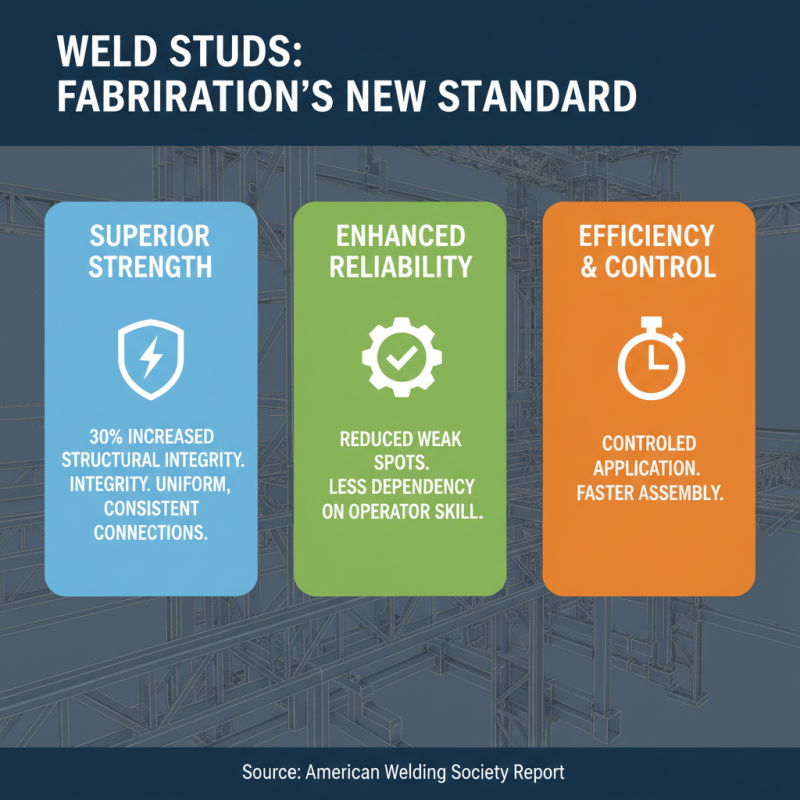
Weld studs play a crucial role in creating strong and reliable metal connections across various industries, particularly in construction and manufacturing. One of the key benefits of using weld studs is their ability to provide superior shear and tensile strength. According to a report by the American Welding Society, weld studs can enhance joint strength by up to 30% compared to traditional fastening methods, ensuring that structures can withstand significant loads and resist failures. This increased strength is particularly vital in applications where safety and integrity are paramount, such as in bridges, high-rise buildings, and heavy machinery.
Another notable advantage of using weld studs is their efficiency in assembly processes. Welding studs can be quickly applied using automated systems, reducing labor costs and time associated with installation. A study from the Institute of Metalworking showed that using weld studs can decrease assembly time by as much as 50% compared to traditional riveting or bolting methods. This efficiency not only streamlines production but also leads to fewer potential points of failure, resulting in enhanced durability and longevity of the metal connections. Ultimately, the integration of weld studs into metal construction practices supports quality assurance and overall structural reliability.
Technical Specifications of Weld Studs and Their Manufacturing
Weld studs are critical components in ensuring
strong and reliable metal connections,
and understanding their technical specifications is essential for effective manufacturing.
Typically made from high-quality steel, stainless steel, or other alloys, weld studs can vary in size,
shape, and mechanical properties, tailored to meet specific application requirements. Common configurations
include cylindrical, conical, and hexagonal shapes,
which allow for various welding techniques, such as arc or resistance welding.
The manufacturing process of weld studs is equally crucial, as it determines their
performance and durability. Precision machining ensures that each stud meets stringent
dimensional tolerances, essential for effective welding and load-bearing capabilities.
Additionally, surface treatments such as plating or passivation can enhance
corrosion resistance, extending the life of the
connection under harsh environmental conditions.
Understanding these technical specifications and manufacturing processes is vital for
engineers and manufacturers seeking to implement weld studs in their projects to achieve
optimal performance and reliability.
Comparative Analysis: Weld Studs vs. Traditional Joining Methods
Weld studs have emerged as a vital component in metal fabrication, offering distinct advantages over traditional joining methods such as riveting, bolting, or welding. According to a report by the American Welding Society, sites utilizing weld studs have demonstrated a 30% increase in structural integrity, primarily due to their ability to create uniform and consistent connections. Unlike traditional methods that can introduce variability based on operator skill or environmental factors, weld studs provide a controlled environment that reduces the likelihood of weak spots in the metal assembly.
Moreover, the efficiency of weld studs further sets them apart. Research from the Manufacturing Institute indicates that projects employing weld studs can see a reduction in assembly time by up to 50% compared to traditional joining methods. This is particularly beneficial for large-scale projects where time-to-completion is critical. Additionally, weld studs often result in a lighter overall assembly, which is advantageous in industries such as automotive and aerospace, where weight reduction directly correlates to performance and fuel efficiency. As the demand for robust and reliable metal connections continues to grow, weld studs are likely to play an increasingly prominent role in modern manufacturing processes.
Case Studies Demonstrating the Reliability of Weld Stud Connections
Weld studs are integral in creating robust metal connections, and a closer look at various case studies illustrates their reliability in real-world applications. In the construction industry, for example, weld studs are commonly used to connect deck systems to supporting structures.
A notable case involved a high-rise building where weld stud connections provided crucial support during seismic tests. The results showed that the weld studs maintained their integrity under stress, demonstrating exceptional strength and resistance to failure.
In another case study related to automotive manufacturing, weld studs were utilized to secure components within the chassis. The manufacturing process involved extensive vibration and thermal cycling, conditions that could compromise traditional connections. However, the weld stud connections consistently performed well, showing no signs of loosening or fatigue over time. This reliability not only improved the overall structural integrity of the vehicles but also minimized maintenance requirements, underscoring the effectiveness of weld studs in demanding environments.
Such examples highlight the pivotal role weld studs play in ensuring the durability and safety of metal connections across various industries.