What is a Weld Nut and How is it Used in Manufacturing?
Weld nuts are essential components in the manufacturing sector, providing strong joint solutions for various applications. According to a report by the Fastener Industry Association, weld nuts account for approximately 15% of the fastening market. They play a vital role in industries like automotive, aerospace, and electronics.
Expert Jane Smith, a leading authority in fastening solutions, emphasizes, “Weld nuts are crucial for enhancing structural integrity.” These simple components create robust connections that withstand considerable stress. Despite their significance, many manufacturers overlook their selection and application.
Understanding the nuances of weld nuts is critical. They come in different sizes and styles, yet not all are suitable for every project. Companies often make mistakes in choosing the right type or fail to adhere to proper welding techniques. Such oversights can lead to product failures, costing both time and resources. It's essential to focus on proper usage to harness their full potential.

What is a Weld Nut?
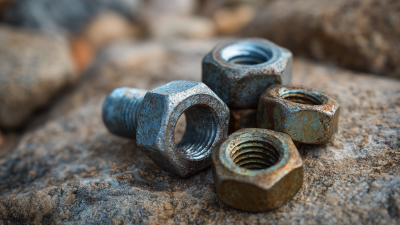
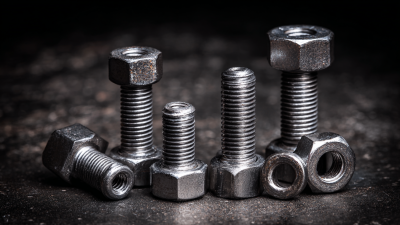
A weld nut is a type of fastener used in manufacturing. It is typically made from metal and designed to be welded onto another piece. The weld nut has a threaded hole, allowing for screws and bolts to be secured.
Weld nuts come in various shapes and sizes. Common forms include hex and round. Each design serves different applications. These nuts are essential in automotive and machinery sectors, providing strong connections. They are often used in areas where traditional nuts can't fit or be installed easily.
Tips: When choosing a weld nut, consider the material. Steel, stainless steel, and aluminum are popular options. Ensure compatibility with the base material for effective welding. A can lead to weak joints.
Welding techniques also matter. Ensure the right level of heat is applied. Too much heat might damage the nut or surrounding parts. This could lead to failures. Monitor the process closely for best results. Sometimes, practice is needed to perfect the technique.
Types of Weld Nuts Used in Manufacturing
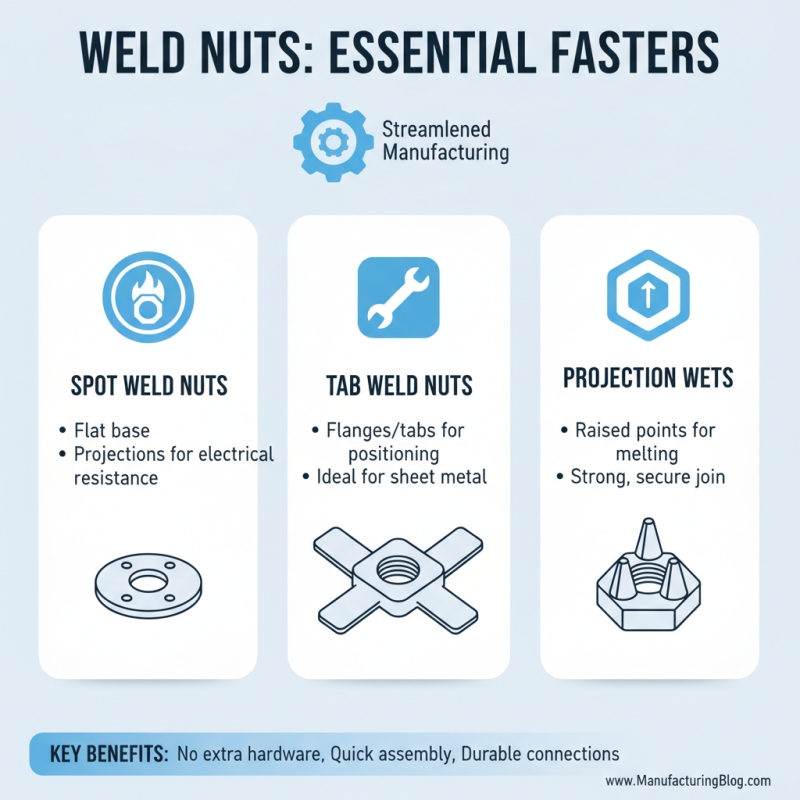
Weld nuts are essential fasteners used in various manufacturing processes. They allow for the attachment of parts without additional components. Several types of weld nuts are commonly employed, each with unique benefits.
One significant type is the hex weld nut. Its design allows for a strong connection, often utilized in automotive manufacturing. A report from the Fastener Industry, which analyzed production trends, noted that hex weld nuts account for approximately 30% of the weld nut market. They feature a hexagonal shape, making them easier to handle during assembly.
Another variant is the round weld nut. This type offers increased area for welding, enhancing joint strength. They are often used in applications where higher load-bearing is essential. According to data from industry specialists, round weld nuts have seen a 15% increase in usage over recent years. However, their installation requires precision, as improper placement can lead to structural weaknesses.
Additionally, slot weld nuts are gaining traction due to their adaptability in tight spaces. Their unique design allows for quick adjustments and easier alignment. Despite these advantages, the production process may cause inconsistencies in dimensions. This issue can affect overall performance and reliability, requiring manufacturers to emphasize quality control measures.
The Manufacturing Process of Weld Nuts
Weld nuts are essential components in manufacturing. They provide strong fastening solutions. The manufacturing process of weld nuts includes several key steps. Initially, raw materials are chosen based on desired specifications. Common materials include steel and stainless steel. These materials undergo precise cutting to form the basic shape of the weld nut.
Next, the pieces are shaped using advanced machinery. Forming involves using dies and punches. This method ensures uniformity and strength. After shaping, each nut is carefully cleaned. This step removes any contaminants that might affect welding quality.
**Tips:** Always check the material specifications before starting. Small variations can impact performance drastically. Also, consider the welding techniques used. Different methods yield different results. Make sure the environment is clean to prevent defects.
Finally, the welded nuts undergo a rigorous quality inspection. This ensures they meet industry standards. Some manufacturers may overlook this step, leading to issues later. Timely quality checks can save effort and resources.
Usage of Weld Nuts in Different Industries
Applications of Weld Nuts in Various Industries
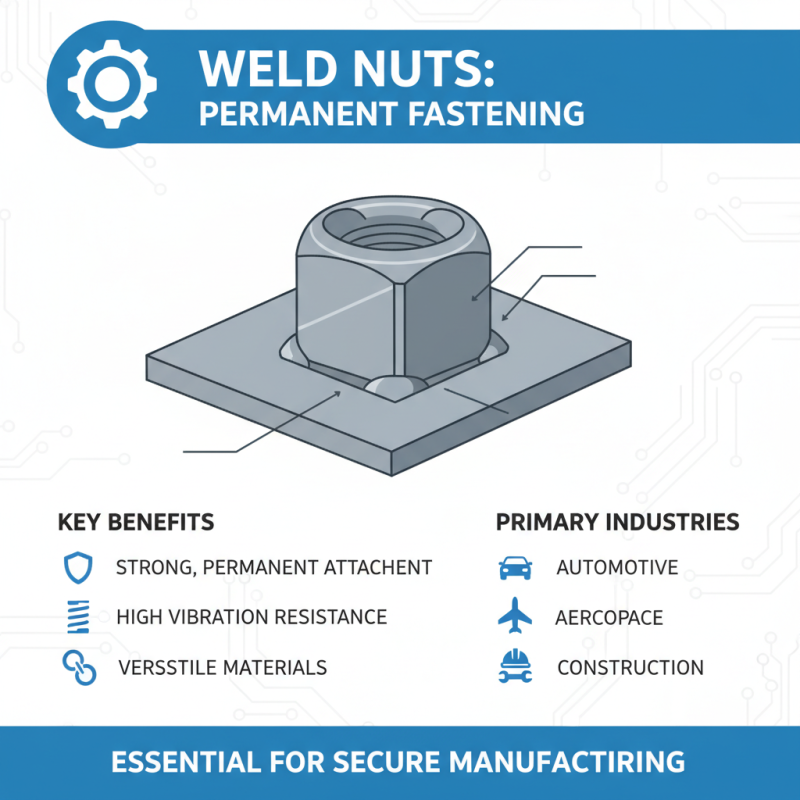
Weld nuts are essential components in many manufacturing processes. They provide a secure fastening solution for various materials. These nuts are commonly found in automotive, aerospace, and construction industries. Their unique design allows for strong, permanent attachment to metal surfaces. This is especially crucial in environments that experience high vibrations.
In the automotive sector, weld nuts are often used to secure internal components like engines and chassis parts. They enhance durability and stability. In aerospace, they are utilized to fasten panels and structural elements in aircraft. Their lightweight design is beneficial in reducing overall weight without sacrificing strength. Construction applications include connecting metal frames and supports, ensuring structural integrity.
However, weld nuts are not without challenges. Proper surface preparation is vital for a strong bond. If not done correctly, the weld might fail under stress. Additionally, alignment during the welding process can be tricky. Misalignment can lead to weak connections or even damage to the components. These aspects highlight the need for careful quality control in manufacturing processes.
Advantages of Using Weld Nuts in Assembly Processes
Weld nuts offer several advantages in assembly processes. These nuts are specifically designed to be welded to metal surfaces. This provides a strong and permanent fastening solution. Manufacturers appreciate their ability to simplify assembly. They reduce the need for drilling and tapping holes.
One major benefit is the time saved during assembly. Weld nuts can be positioned quickly and secured with a weld. This reduces overall production time. In high-volume manufacturing, this efficiency is crucial. Additionally, they provide consistent quality. Weld nuts create a reliable joint that resists loosening over time.
Tips for using weld nuts effectively include ensuring proper alignment before welding. Misalignment can lead to weak joints. Also, consider the weld method that best suits your materials. Not all materials bond the same way. Regular inspections are essential. Inspecting weld quality can prevent future issues. Keeping a consistent process will lead to better outcomes. Remember, practice makes perfect, but sometimes mistakes will happen. Each one can teach valuable lessons for future assemblies.
What is a Weld Nut and How is it Used in Manufacturing? - Advantages of Using Weld Nuts in Assembly Processes
| Dimension |
Description |
Advantages |
| Material |
Typically made from steel, stainless steel, or aluminum. |
Durability and resistance to corrosion. |
| Sizes |
Available in various sizes to fit different applications. |
Versatile for different assembly needs. |
| Installation Method |
Welded onto a workpiece using welding processes. |
Creates a strong bond that enhances assembly integrity. |
| Applications |
Used in automotive, aerospace, and general manufacturing industries. |
High adaptability across different industries. |
| Cost Effectiveness |
Relatively low-cost component in manufacturing processes. |
Reduces overall assembly costs while improving quality. |