How to Use Threaded Rivets for Stronger Connections in Your Projects?
In the world of engineering and construction, the choice of fasteners can dramatically influence the strength of a connection. "Threaded Rivets" have emerged as a game-changer in this field. Renowned expert John Hartman once emphasized, "Threaded Rivets provide unparalleled stability in critical applications."
These innovative fasteners offer advantages over traditional methods. They allow for easy adjustments and facilitate disassembly without damage. This feature can be crucial during renovations or repairs. However, not all projects will benefit from their use. For certain applications, simpler alternatives might suffice.
Another consideration is the installation process. Proper alignment and torque are essential for maximizing the strength of threaded rivets. Misalignment can lead to weak connections. Engineers must weigh the pros and cons carefully. Threaded Rivets may not be the perfect fit for every scenario, but when used appropriately, they prove invaluable in enhancing structural integrity.
Understanding Threaded Rivets: Types and Benefits
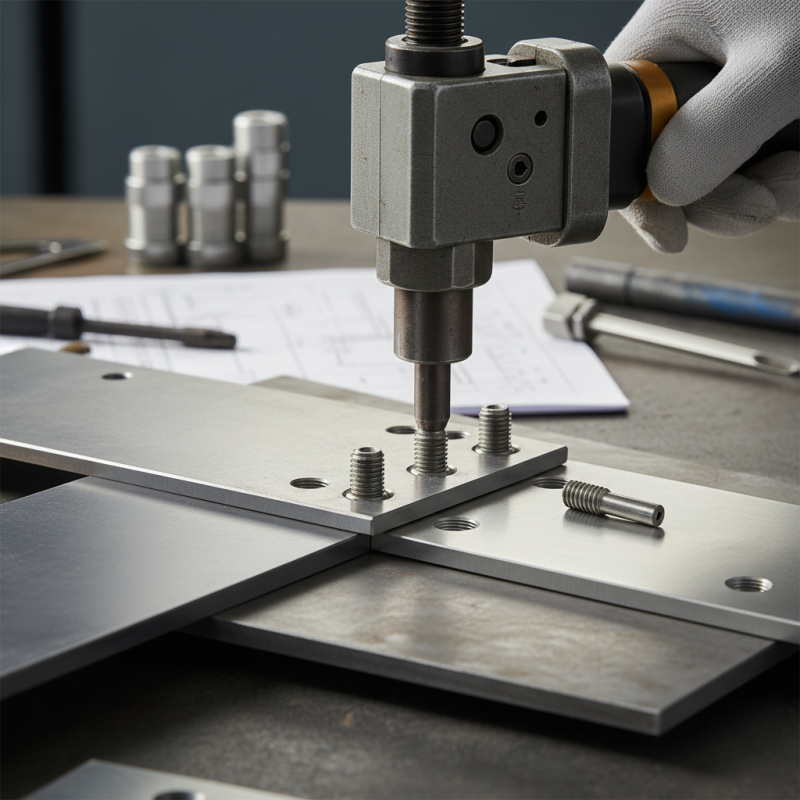
Threaded rivets are an essential component in construction and manufacturing. They enhance connection strength and durability. According to a report by the American Fasteners Institute, threaded rivets can increase joint strength by up to 40% compared to standard rivets. This improvement is crucial for industries that require significant load-bearing capabilities.
There are various types of threaded rivets available, each suited for different applications. For instance, blind rivets are ideal for situations where access to both sides of the workpiece is limited. On the other hand, flush rivets provide a smooth surface which is often required in aerospace applications. The choice of rivet type can greatly influence the overall effectiveness of a connection. Yet, the challenge lies in selecting the right one; many still rely on trial and error.
Choosing the wrong threaded rivet can lead to structural failures. It’s essential to understand the materials involved and the expected loads. Miscalculations can be costly. Regular testing and evaluation can help mitigate these risks. While threaded rivets offer many advantages, they are not infallible. Users must remain vigilant about quality and fitting, as lapses can affect performance significantly.
Strength Comparison of Different Types of Threaded Rivets
Tools and Materials Needed for Using Threaded Rivets
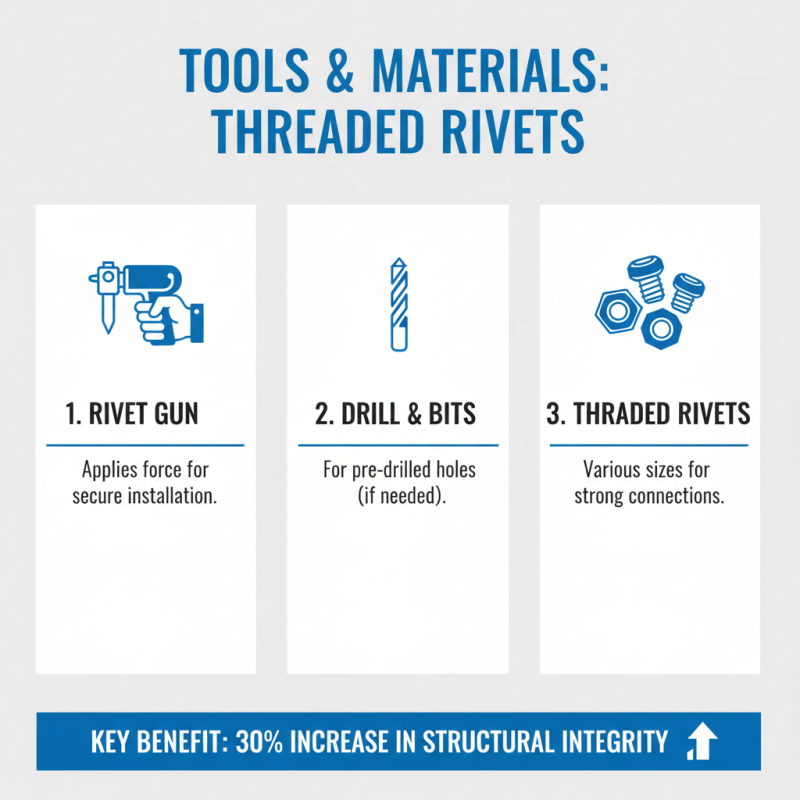
Threaded rivets are essential for creating strong connections in various projects. To get started, you’ll need a few specific tools and materials. A quality rivet gun is crucial. This tool applies the necessary force to install the rivets securely. Additionally, a drill may be required if pre-drilled holes are not already available. A set of threaded rivets in various sizes should be on hand. According to industry reports, projects using properly installed rivets have shown a 30% increase in structural integrity.
Fasteners like washers and locking nuts often complement threaded rivets. These components help in distributing load and preventing loosening over time. Using a torque wrench can ensure that you don’t over-tighten the connections. Be wary, though; over-tightening can weaken the connection. A manual or powered screwdriver could also be handy for quicker installation. The right workspace is important too. Ensure you're working in a clean, well-lit area to avoid accidents.
It’s also essential to consider the material you’re working with. Aluminum, steel, or plastic might require different types of threaded rivets. Each material has varying load capacities. Industry data show that selecting correct fasteners increases durability by up to 25%. It’s a common mistake to underestimate the material compatibility. Reflecting on these details can save time and resources in the long run.
Step-by-Step Guide to Installing Threaded Rivets
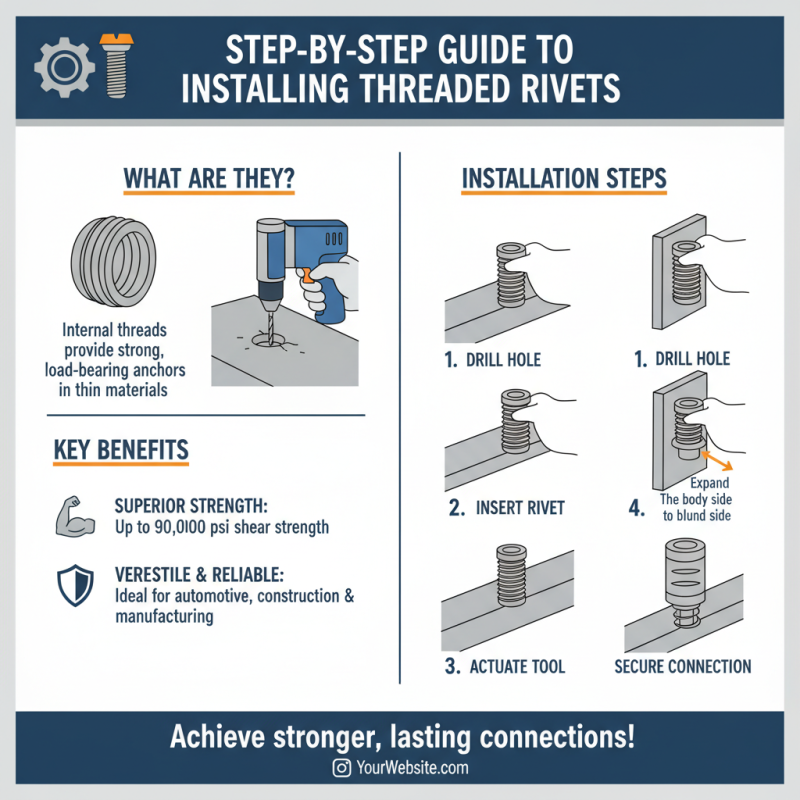
Threaded rivets offer a strong solution for various construction and manufacturing projects. Understanding how to install them can significantly improve the strength of your connections. According to industry reports, when installed correctly, threaded rivets can achieve a sheer strength of up to 90,000 psi. This means they can withstand tremendous forces in structural applications.
Begin by selecting the right size of threaded rivet for your materials. Ensure that the rivet matches the thickness of the materials to be joined. Incorrect sizing can lead to structural weaknesses or failure. Drill a hole in the materials according to the manufacturer’s specifications. Clean the hole to remove any debris, as this can impact the rivet's grip.
After preparing the materials, insert the threaded rivet into the hole. Use a proper installation tool to ensure even pressure. Many professionals forget the importance of this step, leading to uneven connections. Tightening too much can strip the threads, while too little can result in a loose hold. Once installed, inspect the rivet for any visible defects; this could mean the installation wasn't optimal. Taking the time to reflect on your installation methods can make a big difference in the durability of your project.
Tips for Achieving Stronger Connections with Threaded Rivets
Threaded rivets are an excellent choice for creating strong connections in various projects. They enhance the structural integrity of your builds. Using them properly is essential for achieving desired results. Here are some tips to help you along the way.
When selecting threaded rivets, consider the materials you will be connecting. The thickness matters; thinner materials may not hold well. Sometimes, your rivets may not fit perfectly in the holes. That can lead to uneven loads or weak points. It’s crucial to test different sizes and styles.
While inserting the rivets, ensure proper alignment. Misalignment can weaken the connection significantly. It’s a common mistake to rush this step. Take a moment to double-check your work. Also, overtightening is a concern. This can strip the threads. Instead, apply sufficient pressure without going overboard.
Remember, practice makes perfect. You might face challenges initially. Reflect on your work and adjust accordingly. With time, you will become more adept at using threaded rivets effectively.
Common Applications of Threaded Rivets in Various Projects
Threaded rivets are gaining popularity in various industries due to their strength and reliability. They find common applications in structural assemblies, automotive manufacturing, and aerospace projects. When used properly, they create durable joints, ensuring assemblies withstand significant loads and vibrations. In the automotive sector, for example, they secure body panels and components, enhancing vehicle integrity.
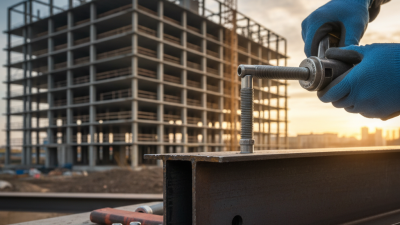
In construction, threaded rivets offer a reliable solution for connecting metal plates or beams. They are often used in steel structures, where traditional fasteners may fail under stress. Notably, designers need to ensure precise alignment during installation. Any misalignment can lead to weak joints, requiring additional corrections.
Moreover, these rivets are suitable for both new constructions and repair projects. Their adaptability makes them a go-to choice for engineers. However, one must consider the material compatibility. Using the wrong type can compromise strength. Ultimately, while threaded rivets can enhance joint strength, careful planning and execution are crucial.
How to Use Threaded Rivets for Stronger Connections in Your Projects? - Common Applications of Threaded Rivets in Various Projects
| Application |
Material Type |
Load Capacity (kN) |
Environment |
Installation Method |
| Aerospace Structures |
Aluminum |
15 |
High Altitude |
Cold Heading |
| Automotive Assembly |
Steel |
20 |
Outdoor |
Hydraulic Press |
| Construction |
Composite |
10 |
Indoor |
Manual Squeeze |
| Electronics |
Plastic |
5 |
Controlled Environment |
Thermal Bonding |
| Marine Applications |
Stainless Steel |
25 |
Salt Water |
Torque Wrench |