Why Choose Masonry Anchors for Your Next Project?
Masonry anchors are essential for a variety of construction projects. They provide stability and strength to structures. Choosing the right anchor can make a significant difference in your project’s success.
Masonry anchors resist the forces of nature and heavy loads. They ensure that components stay securely attached to masonry surfaces. This reliability is crucial in both residential and commercial settings. Using high-quality masonry anchors enhances durability, reducing the risk of failures over time.
Selecting masonry anchors demonstrates a commitment to quality and safety. While the process of choosing may seem straightforward, it often requires careful thought. Factors like weight, material compatibility, and installation methods must be considered. Reflecting on these aspects can lead to better decisions. In the end, masonry anchors stand as silent witnesses to the strength and reliability of a well-built project.
Advantages of Using Masonry Anchors in Construction Projects
When it comes to construction, masonry anchors offer significant advantages. They provide strong, reliable support in various applications. Research shows that the failure rate of improperly installed anchors can be as high as 20%. This highlights the importance of using quality masonry anchors to ensure safety and effectiveness.
Masonry anchors come in various types, including wedge anchors and sleeve anchors. These anchors can handle heavy loads effectively. According to the International Code Council, masonry anchors can carry loads of up to 1,200 pounds, making them suitable for both residential and commercial projects. Their versatility allows them to be used in concrete, brick, and stone, offering flexibility for builders.
Tip: Always verify the load capacity of your chosen anchor. Overloading can cause structural failures. During installation, ensure that the hole is clean and free from dust. A proper fit enhances the anchor's performance.
Another aspect to consider is the potential for corrosion. Steel anchors can degrade over time if not treated properly. Protective coatings can mitigate this risk. It's crucial to choose anchors designed for specific environments, especially in areas with high moisture levels.
Tip: Inspect your anchors regularly. Look for signs of wear or damage. Early detection can prevent costly repairs down the line.
Types of Masonry Anchors: A Brief Overview
Masonry anchors are essential for various construction projects. There are several types, each designed for specific applications. Understanding these options is crucial for success. The most common types include sleeve anchors, wedge anchors, and expansion anchors.
Sleeve anchors are versatile. They provide strong holding power in concrete, brick, and block. According to the American Concrete Institute, sleeve anchors have a load capacity that can exceed several hundred pounds. This makes them ideal for heavy-duty tasks like mounting structural supports.
Wedge anchors are another popular choice. They function best in solid concrete. A report from the International Concrete Repair Institute highlights that wedge anchors achieve maximum holding strength when correctly installed. Improper installation can lead to reduced effectiveness, which is a common mistake. Expansion anchors are suitable for hollow walls. They expand within the cavity, gripping the sides securely. However, their performance can vary based on wall thickness and material. Choosing the right anchor is critical to ensure safety and durability.
Types of Masonry Anchors
This chart illustrates the popularity of different types of masonry anchors based on usage in construction projects. As shown, Concrete Screws and Expansion Anchors are the most widely used, highlighting their effectiveness in various masonry applications.
Factors to Consider When Choosing Masonry Anchors
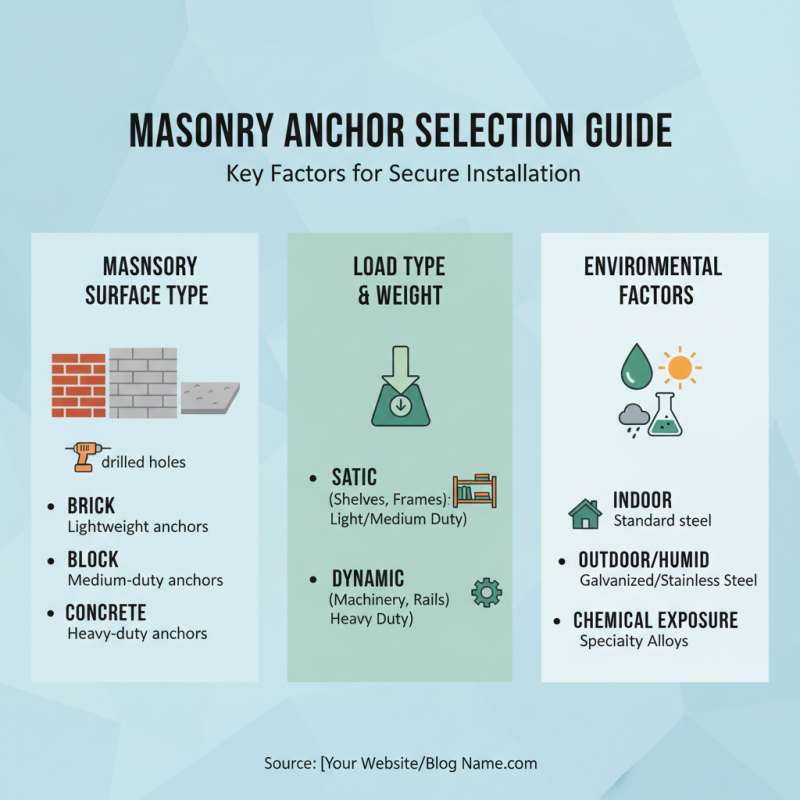
When selecting masonry anchors, several factors must be prioritized for efficiency. The type of masonry surface is crucial—brick, block, or concrete. Each material requires a specific anchor type to ensure secure installation. For instance, a lightweight anchor suffices for drilled holes in brick, while heavy-duty versions are necessary for concrete.
The load-bearing requirements are also essential. Knowing the weight the anchor will support helps choose the right one. Overestimating or underestimating can lead to failures. Next, consider the installation environment. Moisture levels, temperature fluctuations, and potential exposure to chemicals impact anchor performance. Corrosion-resistant options may be worth exploring.
Additionally, think about the installation process itself. Some anchors require specialized tools, while others are straightforward. Complexity can delay project timelines. Finally, always seek the advice of experienced professionals when in doubt. Rely on their expertise to avoid unforeseen challenges. Remember, using the right masonry anchor is vital for the longevity and safety of your project.
Installation Techniques for Masonry Anchors
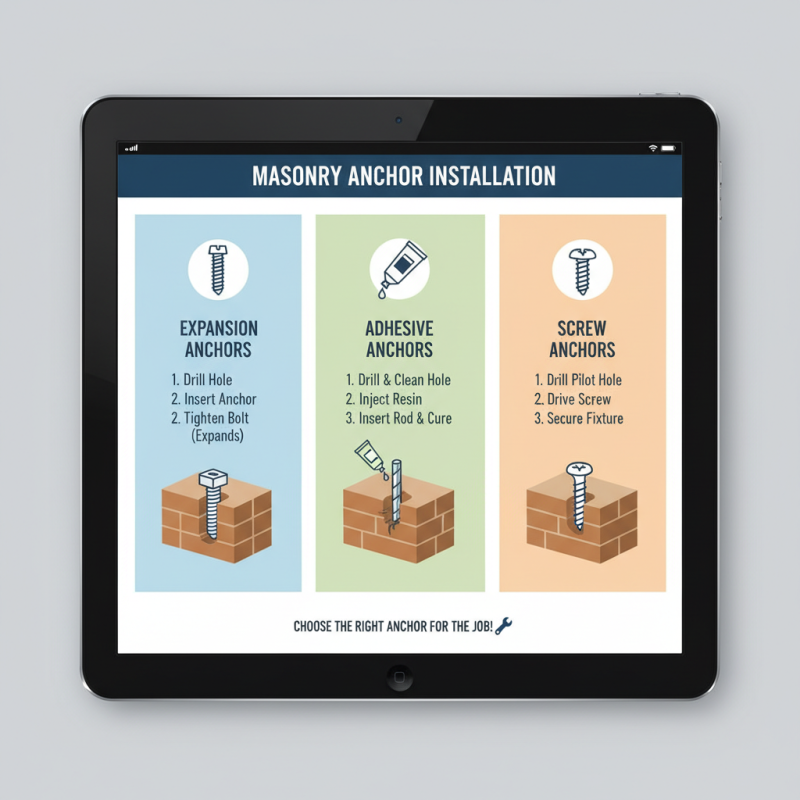
Masonry anchors are essential for various construction projects. Their installation can be tricky but rewarding. To start, it’s crucial to choose the right type of masonry anchor for your specific needs. Common options include expansion anchors, adhesive anchors, and screw anchors. Each serves a different purpose and has unique installation requirements.
When installing masonry anchors, drill holes at the correct depth and diameter. Ensure the drill bit matches the specifications of the chosen anchor. For example, expansion anchors require specific spacing to function effectively. A tip for accuracy: mark the drilling points clearly to avoid misalignment. Take your time to avoid mistakes; rushing can lead to improperly secured anchors.
Consider the condition of the masonry. Older materials may require more careful handling. If you're unsure, test the surface before proceeding. Always wear safety gear during installation—dust and debris can be hazardous. For optimal results, periodically reassess your technique. Reflecting on past installations can help you improve over time. Each project offers lessons for future endeavors.
Applications of Masonry Anchors in Various Industries
Masonry anchors play a vital role across various industries. In construction, they secure structural elements to masonry substrates. Reports indicate that the global masonry anchors market is expected to grow at a CAGR of over 5% between 2021 and 2026. This reflects increasing demand for reliable anchoring solutions.
In the telecommunications sector, masonry anchors are critical for installing antennas and towers. Proper anchoring prevents equipment from being dislodged in severe weather. Studies show that poorly installed anchors can lead to significant operational failures, demonstrating the need for skilled installation.
Additionally, the manufacturing industry relies on masonry anchors for machinery and assembly lines. These anchors ensure equipment remains stable during operation, boosting productivity. Yet, there are instances where incorrect anchor selection results in structural weaknesses. Evaluating the specific needs of each project is vital. Understanding site conditions is crucial for optimal performance.
Why Choose Masonry Anchors for Your Next Project?
Applications of Masonry Anchors in Various Industries
| Industry |
Common Applications |
Type of Masonry Anchors Used |
Advantages |
| Construction |
Securing structural elements, brick facades |
Expansion Anchors, Screw Anchors |
High load capacity, durability |
| HVAC |
Mounting equipment, ductwork |
Sleeve Anchors, Wedge Anchors |
Reliable hold, easy installation |
| Telecommunications |
Mounting antennas, supporting poles |
Concrete Screws, Adhesive Anchors |
Versatile, weather-resistant |
| Retail |
Securing displays, signage |
Hammer-Set Anchors, Toggle Bolts |
Aesthetic appeal, stability |
| Industrial |
Supporting heavy machinery, racking systems |
Heavy-Duty Anchors, Post-Installed Anchors |
High strength, load distribution |