What are Elevator Bolts and How to Choose the Right Ones?
Elevator bolts are a crucial component in heavy-duty applications. Used mainly in elevators and conveyor systems, they provide secure fastening. Choosing the right elevator bolts can significantly impact safety and performance.
Understanding various types is essential. Elevator bolts differ in size, material, and head design. Each variation serves specific needs. For instance, a wider head distributes load more effectively. However, selecting the wrong type may lead to failures.
When evaluating options, consider the environment and load requirements. Corrosion-resistant materials could enhance longevity in humid settings. It’s wise to consult a professional or manufacturer for recommendations. Reflecting on common mistakes in selections can lead to better choices in the future.
Understanding Elevator Bolts: Definition and Purpose
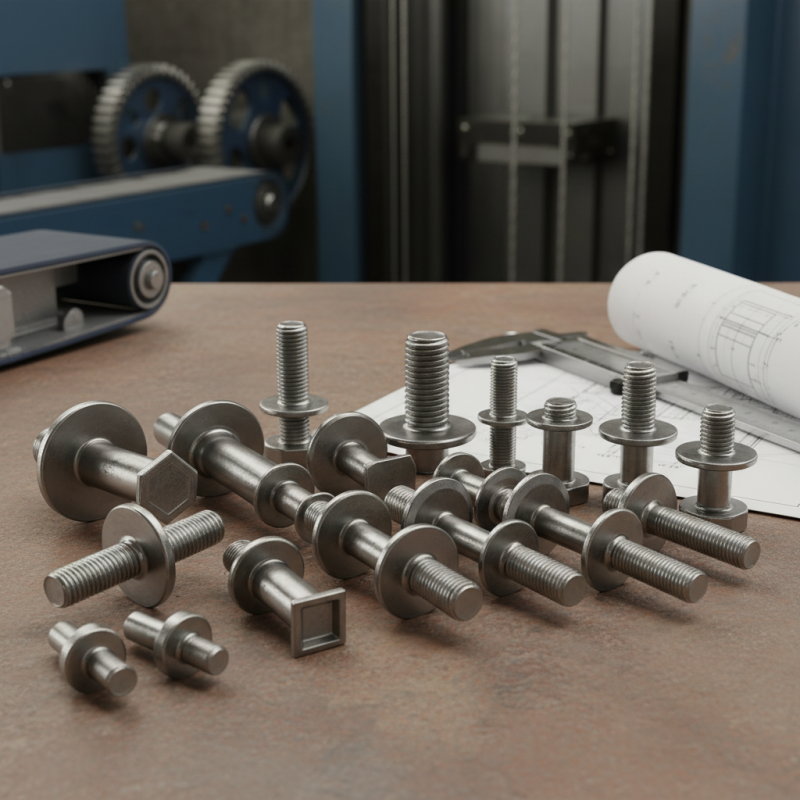
Elevator bolts are essential fasteners used to assemble various components in heavy machinery and equipment. They are characterized by a large, flat head and a thick, sturdy shaft designed to hold significant weight. Typically made of high-strength materials, these bolts ensure reliability in critical applications.
When selecting elevator bolts, consider the material and size. Steel bolts offer strength, while stainless steel provides corrosion resistance. Pay attention to the diameter and length to ensure a proper fit for your project.
Tips: Always check the load capacity guidelines. A bolt that seems strong may not be suitable for your specific use. Test a sample before full-scale application. Sourcing from reputable suppliers enhances reliability.
Regular inspections also matter. Over time, wear and tear can compromise the integrity of elevator bolts. Replace any that show signs of damage early. Doing so can prevent failures in critical operations. Understanding these aspects leads to safer, more effective machinery use.
What are Elevator Bolts and How to Choose the Right Ones?
| Dimension |
Grade |
Head Type |
Material |
Common Uses |
| 1/4"-20 x 1" |
Grade 2 |
Flat |
Steel |
Light-duty applications |
| 5/16"-18 x 1-1/2" |
Grade 5 |
Large Flat |
Zinc-Plated Steel |
Medium duty applications |
| 3/8"-16 x 2" |
Grade 8 |
Hex |
Alloy Steel |
Heavy-duty applications |
| 1/2"-13 x 2-1/2" |
Grade 5 |
Large Flat |
Stainless Steel |
Corrosion-resistant applications |
| 3/4"-10 x 3" |
Grade 2 |
Flat |
Black Oxide Steel |
Four wheel applications |
Key Features of Elevator Bolts: Design and Materials
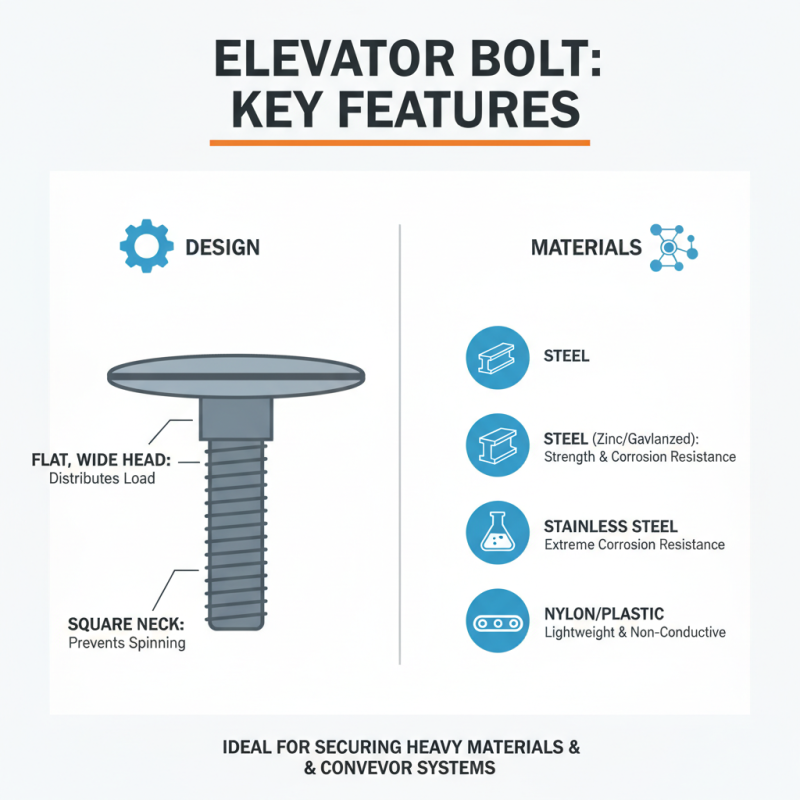
Elevator bolts are essential fasteners used in various industries. Their design and materials play a crucial role in determining their suitability for specific applications. Typically, elevator bolts feature a flat, wide head. This design helps distribute the load over a larger surface area. The square neck prevents the bolt from spinning during installation. These characteristics make them ideal for securing heavy materials.
When selecting elevator bolts, one must consider the materials used in their construction. Common materials include carbon steel, stainless steel, and alloy steel. Carbon steel offers strength but is prone to rust. Stainless steel, on the other hand, is corrosion-resistant and ideal for harsh environments. Alloy steel provides additional durability but may be more expensive. Each material has its pros and cons, so choose wisely based on your project's needs.
Reflecting on the choices available is vital. Often, users overlook the impact of bolt length and diameter, which can affect stability. Selecting the wrong size could lead to project delays or safety hazards. It’s always beneficial to evaluate your requirements thoroughly. This approach ensures that the bolts you choose will perform effectively and last longer in practical applications.
How to Determine the Right Size of Elevator Bolts
Choosing the right size of elevator bolts is crucial for ensuring the safety and efficiency of your equipment. Elevator bolts are specifically designed for heavy-duty applications. This includes use in grain elevators, conveyor systems, and similar machinery. Understanding the dimensions and load capabilities of these bolts is essential for maintaining optimal operational performance.
When selecting elevator bolts, you need to consider their diameter, length, and head type. Most commercial elevator bolts have a large, flat head that distributes load evenly. A recent industry report highlighted that improperly sized bolts can lead to structural failure. Approximately 30% of mechanical breakdowns are attributed to the use of incorrect fasteners. Therefore, accurately measuring the required specifications before making a purchase is critical.
It's also important to assess the material. Carbon steel is common. However, stainless steel is preferred in environments prone to corrosion. A study indicated that 15% of maintenance costs arise from premature failure of components due to inadequate materials. Reflections on past projects often reveal that overlooking bolt specifications can lead to delays and additional costs. Using proper techniques to estimate the needed size is essential for reliable operations.
Factors to Consider When Selecting Elevator Bolts
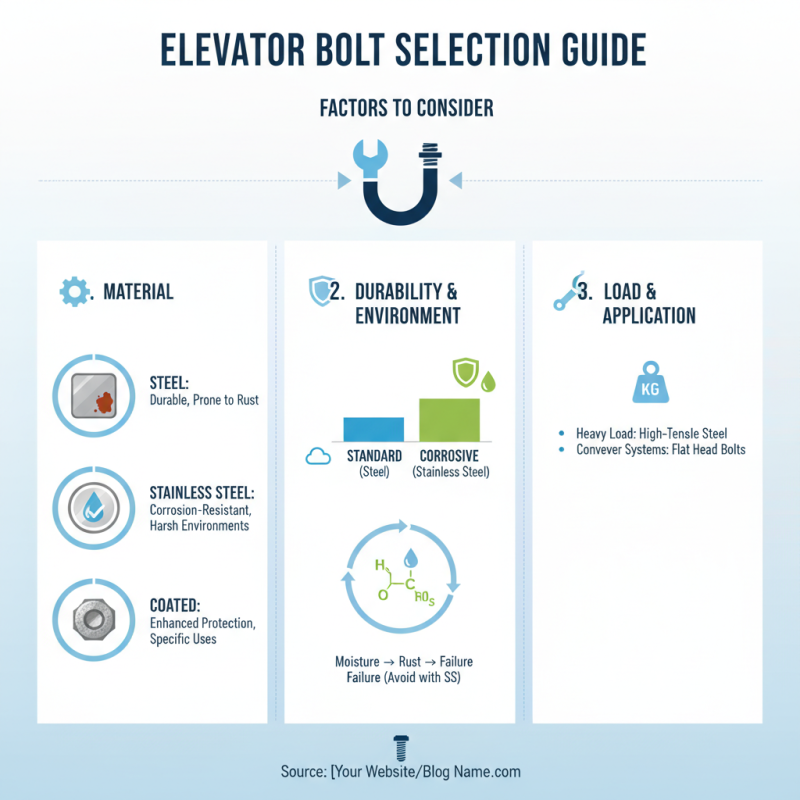
When selecting the right elevator bolts, several factors come into play. Material is crucial. You can choose from steel, stainless steel, or coated options. Each material has unique properties affecting durability. Steel bolts work well in various settings but may rust over time. Stainless steel provides excellent corrosion resistance, making it ideal for challenging environments.
Another significant factor is the size of the bolt. Measure the thickness of the materials being joined. Bolt diameter must fit snugly. Too small, and it may fail; too large, and it can damage the material. Length is equally important. Ensure there’s enough thread engagement for secure fastening.
Load capacity is essential. Consider the weight each bolt will need to support. Evaluate your project’s demands to determine the appropriate strength. It’s advisable to consult with experts to get recommendations. Reflecting on past experiences can help improve your selection process. Mistakes can happen, such as choosing the wrong material or size. Learning from these errors leads to better outcomes in future projects.
Common Applications of Elevator Bolts in Various Industries
Elevator bolts play a crucial role in various industries, facilitating secure connections in machinery and conveyor systems. These bolts typically feature a large, flat head and a smooth shank, making them ideal for securing rubber belts in the agricultural sector. In farming equipment, elevator bolts endure heavy use, often exposed to dirt, moisture, and mechanical stress. Choosing the right bolts for this application ensures optimal performance and durability.
In the manufacturing and construction industries, elevator bolts are commonly used to secure conveyor belts. Their design allows for easy installation and removal, which is beneficial for maintenance. Heavy machinery and assembly lines often rely on these fasteners. The challenge lies in selecting the appropriate size and material. Incorrect choices can lead to premature wear or failure, impacting productivity.
In food processing, the use of elevator bolts must meet hygiene standards. Stainless steel variants are often essential for preventing contamination. Understanding the nuances of material selection is vital. Fasteners must withstand cleaning chemicals and high temperatures. Balancing durability with safety can be tricky. Users need to evaluate their specific needs closely.