What Are the Best Security Bolts for Global Buyers?
Choosing the right Security Bolts is not simply a matter of buying the strongest-looking fastener. Global buyers face different environments, installation methods, supply expectations, and product standards. A bolt used on a coastal gate may need superior corrosion resistance. One installed inside a warehouse may require high tamper resistance and controlled removal. The details matter.
Security technologist Bruce Schneier offers a useful principle: “Security is a process, not a product.” His statement applies directly to Security Bolts. A well-designed bolt can slow unauthorized access, but it cannot replace sound construction, correct installation, or regular inspection. Buyers should examine the bolt head design, alloy, hardness, thread quality, coating, and available tools. They should also confirm dimensions carefully. A small mismatch can weaken an entire fastening system.
This guide explores the features that matter most for international purchasing decisions. It compares tamper-resistant profiles, stainless steel options, hardened materials, and finishes for demanding conditions. It also considers packaging, traceability, technical documentation, and supplier communication. These factors are less visible than a polished bolt head, yet they often determine performance in the field.
No bolt is perfect. Some designs improve resistance but complicate maintenance. Others reduce cost but may wear faster in harsh climates. That trade-off deserves honest attention. Buyers should match the Security Bolts to the asset, threat level, climate, and service plan. Practical testing remains valuable. So does asking uncomfortable questions before placing a large order.
Security Bolt Designs: Shear, One-Way, Pin-Torx, and Breakaway Types
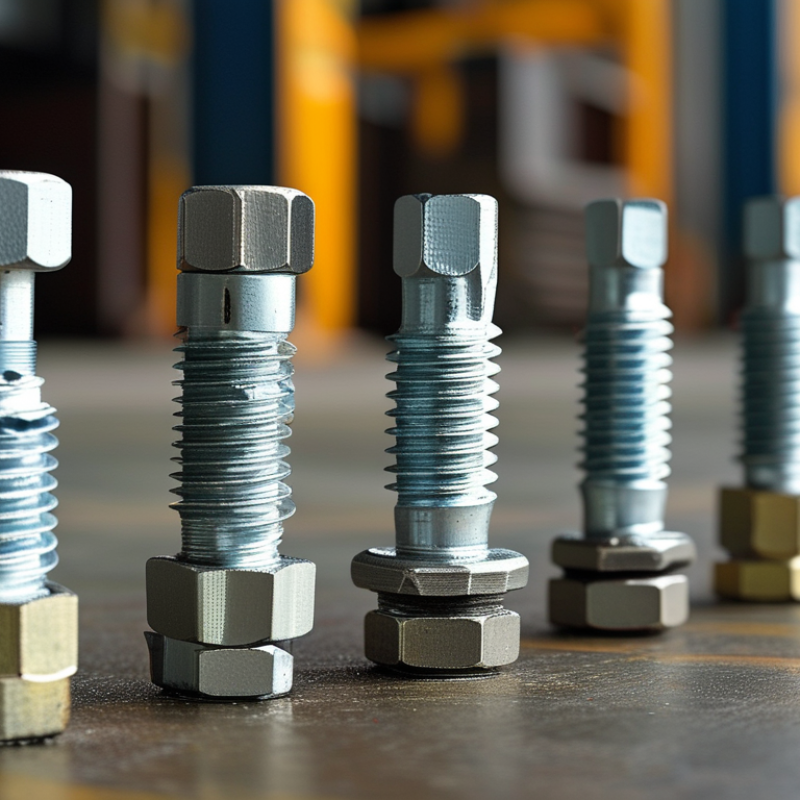
Security bolts are not interchangeable. The FBI’s 2022 Crime Data Explorer estimated 847,522 burglary offenses in the United States. That figure is country-specific, yet it shows why passive physical protection still matters. Shear bolts suit permanent fixtures, such as access panels and external enclosures. Their heads detach after the specified torque, leaving a smooth surface. Removal becomes difficult. Replacement becomes necessary.
One-way bolts offer a lower-cost option for signs, cabinets, and light-duty covers. They install with ordinary tools but resist standard reverse turning. Their weakness is predictable: determined attackers may use gripping tools. Pin-Torx bolts provide a stronger balance. The center pin blocks regular Torx drivers, while the star profile supports controlled tightening and future servicing. For equipment needing planned maintenance, this design is often more practical. Not always stronger, though.
Breakaway bolts work well where visible tampering must be obvious. Their heads separate at a preset torque, creating a clear installation signal. The 2024 Supply Chain Risk Insights Report identified cargo theft and facility vulnerabilities as continuing operational concerns across global supply networks. Buyers should match bolt design with material thickness, corrosion exposure, tool access, and replacement policy. Stainless steel may resist weather, but galling can complicate installation. I have seen specifications overlook this detail. Fit matters. A security bolt cannot compensate for weak threads, poor torque control, or an exposed bracket.
Best Security Bolts for Global Buyers
Comparative view of shear, one-way, pin-Torx, and breakaway security bolt designs. Scores use a 1–5 mechanism-based scale: higher values indicate stronger performance for the stated characteristic.
Shear and breakaway bolts are designed to become difficult or impossible to remove with conventional tools after installation. One-way bolts allow straightforward installation but resist normal reverse removal. Pin-Torx bolts remain serviceable with the correct security bit and are suitable where controlled maintenance is required. These are comparative design scores, not certified laboratory ratings.
Strength Selection: ISO 898-1 Classes 8.8, 10.9, and 12.9
Security bolts are often judged by their unusual drive, but strength selection deserves equal attention. ISO 898-1 provides a useful mechanical reference for metric carbon and alloy steel bolts. Class 8.8 typically offers 800 MPa tensile strength and 640 MPa nominal yield strength. Class 10.9 rises to about 1,000 and 900 MPa. Class 12.9 reaches approximately 1,200 and 1,080 MPa, depending on diameter and applicable requirements.
For equipment panels, public fixtures, and machinery guards, Class 8.8 can suit moderate loads when joint design is sound. Class 10.9 supports higher clamp loads, vibration, or compact connections. Class 12.9 is not automatically better. Its greater hardness may reduce tolerance to poor installation, stress concentration, or hydrogen-related embrittlement. A global buyer should also confirm thread dimensions, property-class markings, coatings, and regional documentation requirements.
In practical assembly reviews, I check bolt class, thread engagement, tightening method, coating, and washer compatibility before approving a purchase. A reliable certificate should identify chemical composition, heat treatment, lot traceability, and test results. Do not accept a class marking alone. Security performance also depends on head geometry, tool control, corrosion resistance, and access around the joint. One overlooked detail can defeat an expensive fastener. I have seen specifications choose Class 12.9 bolts where Class 8.8 would have delivered safer, simpler service. That decision deserves a second look.
Corrosion Ratings: ISO 9223 C1–CX and ASTM B117 Salt-Spray Tests
What Are the Best Security Bolts for Global Buyers?
Corrosion Ratings: ISO 9223 C1–CX and ASTM B117 Salt-Spray Tests
A security bolt is only as reliable as its corrosion specification. ISO 9223:2012 classifies atmospheric exposure from C1, very low, to CX, extreme. Indoor dry storage may fit C1 or C2. Coastal infrastructure, offshore platforms, and heavily polluted zones can reach C5 or CX.
Location changes everything. Salt air can settle inside bolt recesses, while trapped water attacks threads and washers. For global purchasing, request the ISO 9223 category, coating system, base material, and tested assembly. Do not accept “rust resistant” as a technical grade.
ASTM B117 is useful for comparing finishes under controlled salt fog. However, it does not predict exact outdoor service life. A 1,000-hour result is not automatically equal to a specific ISO category. ASTM B117 itself focuses on test conditions, not universal field durability. That distinction matters.
The NACE IMPACT study estimated global corrosion costs at approximately 2.5 trillion US dollars annually, or 3.4% of global GDP. Poor specifications create expensive replacements and unsafe loosening. In my experience, the weakest point is often the washer or damaged thread, not the bolt head. A neat table can mislead. Real exposure deserves more attention.
For demanding sites, buyers should combine ISO 9223 classification with ASTM B117 data, cyclic corrosion testing, and documented inspection results. Choose tamper-resistant geometry only after confirming drainage, installation torque, and maintenance access. Salt spray alone is not enough.
Tamper Resistance: ISO 10664 Drives, Key Control, and Tool Compatibility
For global buyers, security bolts should be judged by more than unusual head shapes. The drive interface is equally important. An ISO 10664 hexalobular drive offers consistent geometry and dependable tool engagement. This can reduce cam-out during installation and removal. It also helps maintenance teams use familiar torque tools. However, an ISO 10664 drive is not automatically tamper resistant. Common tools may still defeat it.
Key control adds a stronger security layer. Buyers should ask whether the drive profile is shared widely or supplied through controlled channels. A restricted key system can limit who receives matching bits. Keep a record of issued tools. Store spare keys in a locked cabinet. Small details matter on busy construction sites. Lost tools create real exposure.
Tool compatibility deserves a practical test before purchase. Check the required bit size, access clearance, torque range, and replacement availability in each destination market. A bolt may perform well in a laboratory but frustrate technicians in the field. Trial installation helps reveal this gap. It is not perfect, though. Tool control can weaken when contractors change. Regular audits and clear handover records are sensible safeguards. The best choice balances resistance, serviceability, and controlled access rather than chasing the most exotic head design.
Global Sourcing Checks: ISO Metric Threads, ASME B1.1, and Traceability
What Are the Best Security Bolts for Global Buyers?
Global Sourcing Checks: ISO Metric Threads, ASME B1.1, and Traceability
Choosing security bolts starts with thread discipline, not appearance. Global buyers should confirm ISO metric threads against ISO 261 and ISO 965 requirements. Inch-based orders require ASME B1.1 verification. Do not guess. A receiving inspector can check diameter, pitch, thread fit, and gauge results before installation. One mismatched pitch can damage an expensive assembly.
The 2023 ISO Survey recorded 1,265,216 valid ISO 9001 certificates worldwide. That figure shows the reach of documented quality systems. It does not prove every bolt is correctly made. Request the manufacturer’s inspection plan, material certificate, hardness results, coating details, and certificate of conformity. Each document should match the purchase order. Traceability should continue from steel heat to production lot, packaging label, and shipment record. Shorter records are not always better.
NIST supply-chain guidance emphasizes supplier validation, provenance, and audit evidence. Apply that logic to every critical fastener. Ask for sample lot markings before approval. Check whether markings remain readable after coating or handling. An independent laboratory can confirm tensile strength and chemical composition when risk is high. A practical weakness remains: paperwork can be complete while sampling is too narrow. I would therefore combine document review with dimensional inspection and periodic retesting. That approach costs more, but it exposes quiet process drift before field failure.