2026 Best Screws And Bolts For Global Buyers Guide?
In the ever-evolving landscape of manufacturing and construction, the importance of screws and bolts cannot be underestimated. According to a recent report by Grand View Research, the global screws and bolts market is projected to reach USD 126.80 billion by 2028. This showcases a significant demand for high-quality fastening solutions across various industries. Buyers must stay informed about the latest materials and technologies that enhance performance, durability, and cost-effectiveness.
The properties of screws and bolts affect overall structural integrity. Quality imperfections can lead to failures, highlighting the need for precision in manufacturing. For instance, the wrong type of bolt could compromise a construction project, impacting safety and budgets. Buyers should prioritize suppliers who demonstrate reliability and expertise in their fastener offerings.
Knowledge of trends and materials is crucial. The shift toward sustainable practices affects how screws and bolts are produced. Eco-friendly alternatives are becoming more prevalent. However, navigating these options can be challenging. By examining industry reports and expert recommendations, buyers can make informed choices. Understanding these dynamics is key to succeeding in today's competitive market for screws and bolts.

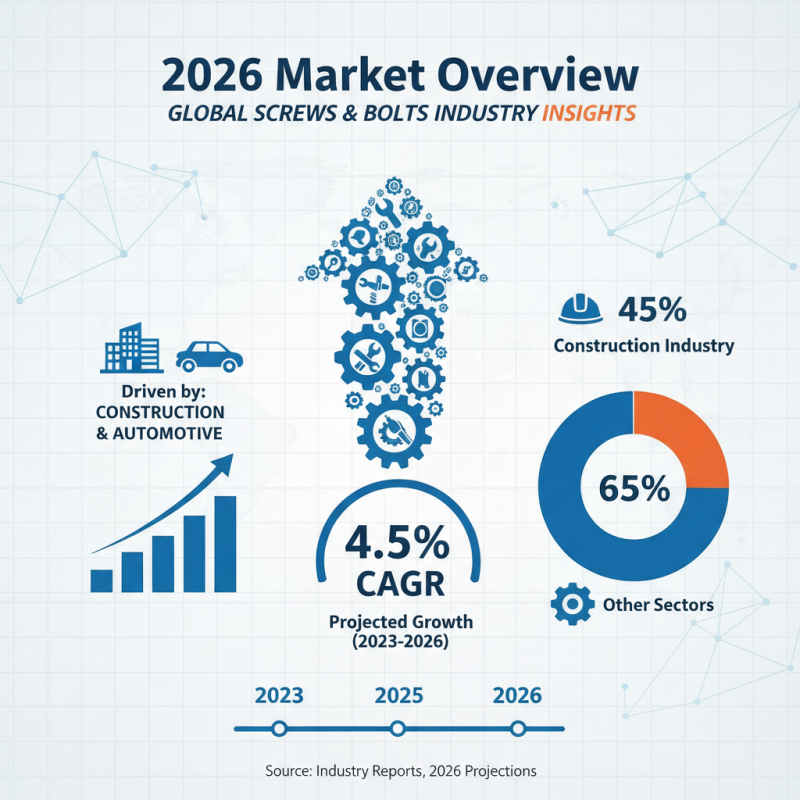
2026 Market Overview: Global Screws and Bolts Industry Insights
The global screws and bolts market is poised for significant growth in 2026. Recent industry reports project a compound annual growth rate (CAGR) of approximately 4.5% within the next few years. This growth is predominantly driven by the rising demand in construction and automotive sectors. The construction industry alone accounts for about 45% of the total market share, showcasing its vital role.
As industries evolve, many manufacturers need to adapt their product lines. Innovations in materials are paramount. For example, materials such as carbon steel and stainless steel are increasingly favored for their durability and resistance to corrosion. However, inconsistencies in quality remain a challenge. Reports indicate that up to 15% of bolts and screws do not meet safety standards, which can pose risks in critical applications.
Geographically, the Asia-Pacific region is expected to lead the market. Countries like China and India are ramping up production to meet both domestic and international needs. However, it is essential for global buyers to remain cautious. Supply chain disruptions and fluctuating raw material prices can affect product availability and cost. Such factors necessitate thorough market analysis and supplier vetting to ensure quality and reliability in procurement decisions.
Material Types: Comparing Steel, Stainless Steel, and Aluminum Screws
When selecting screws, material choice is crucial. Steel, stainless steel, and aluminum all have unique properties that influence their performance. Steel screws are known for their strength. They work well in heavy-duty applications. However, they can rust if not coated or treated.
Stainless steel screws offer excellent corrosion resistance. These screws are ideal for outdoor projects or humid environments. Their durability makes them a popular choice for marine applications. Nevertheless, stainless steel is generally more expensive compared to plain steel. This can be a drawback for some buyers.
Aluminum screws, while lightweight, have their own limitations. They do not have the same tensile strength as steel or stainless steel. This makes them suitable for less demanding applications. They resist rust well, but can strip easily. Buyers must consider weight, strength, and environmental factors when choosing the right material for their needs. Balancing these aspects is key to ensuring a successful project. Each type of screw presents its own challenges. Understanding these nuances is essential for making informed decisions.
2026 Best Screws And Bolts For Global Buyers Guide
| Material Type |
Corrosion Resistance |
Strength |
Weight |
Cost |
| Steel |
Moderate |
High |
Heavy |
Low |
| Stainless Steel |
High |
Medium |
Light |
Medium |
| Aluminum |
Low |
Low |
Very Light |
High |
Performance Metrics: Load Capacity and Corrosion Resistance Analysis
When selecting screws and bolts, performance metrics such as
load capacity and corrosion resistance
are critical. Load capacity refers to the maximum load a fastener can handle without failure.
According to a report by the American Institute of Steel Construction, bolts made from high-strength steel
can carry up to 120,000 psi. However, businesses often overlook the
importance of selecting the right material for the environment in which their fasteners will be used.
Corrosion resistance is another essential factor. Fasteners used in humid or coastal areas face higher risks of
rust and degradation. Stainless steel, for example, offers
excellent corrosion resistance, but its performance can vary based on its grade. A 2022 report from the
National Association of Corrosion Engineers highlighted that using coatings can improve longevity
and performance, but not all applications require these treatments. There are situations when the initial cost of
high-quality materials seems excessive, yet the long-term savings in maintenance and repairs justify the investment.
Tips: Regularly assess your project requirements. Often, choosing the
cheapest option leads to higher costs later. Test materials in
real-world conditions to gauge their performance effectively. Many overlook this crucial step, leading
to early failures.
Standardization: Key International Standards for Screws and Bolts
When considering screws and bolts, standardization plays a vital role in global markets. Numerous international standards govern the manufacturing and testing of these fasteners. For instance, ISO 9001 outlines quality management principles crucial for consistency. It ensures that products meet customer and regulatory requirements.
Another key standard is ASTM A325, which specifies requirements for structural bolts. This helps in maintaining safety across various applications, particularly in construction. According to a recent report by the International Organization for Standardization, over 70% of fastener manufacturers comply with established standards. This compliance enhances reliability and fosters buyer trust.
Despite these standards, challenges remain. Some manufacturers choose to overlook specifications, leading to quality inconsistencies. The global market demands transparency and accountability. Buyers should inquire about compliance with relevant standards. This awareness can prevent costly errors and ensure the right products for specific applications. Understanding standards is essential in ensuring the safety and integrity of constructions and other projects.
2026 Best Screws and Bolts: Global Buyers Guide
This chart illustrates the average tensile strength (in MPa) of commonly used screws and bolts according to various international standards.
Emerging Trends: Innovations in Fastener Technology for Global Buyers
Emerging trends in fastener technology are shaping the way global buyers approach their material needs. A recent study predicts that the fastener market will reach $107 billion by 2025, driven by innovations tailored for efficiency and sustainability. As industries embrace greener practices, many fastener manufacturers are exploring eco-friendly materials. This shift not only reduces environmental impact but can also lower costs in the long run.
One notable trend is the integration of smart technology into fasteners. Sensors embedded in screws and bolts can monitor structural integrity in real time. This advancement could revolutionize industries like construction and aerospace, where safety is paramount. Reports indicate that 20% of critical failures are linked to fastener issues. Such innovations enhance reliability, yet they also raise questions about data security and maintenance protocols.
Furthermore, the demand for lightweight and high-strength materials continues to rise. Companies are prioritizing research into alternative alloys and composites. However, sourcing these advanced materials can be a challenge. Balancing performance with cost remains a complex puzzle. As technologies evolve, so too must the strategies of global buyers in navigating these fastener trends.